Why priorities fail
The common failure patterns: lists nobody can defend, criteria agreed after the argument, and changes that arrive without a reason attached.
How to create better plans and make smarter decisions. The book describes how organizations make and sustain priority decisions, and introduces the five-phase DEGAP® method.
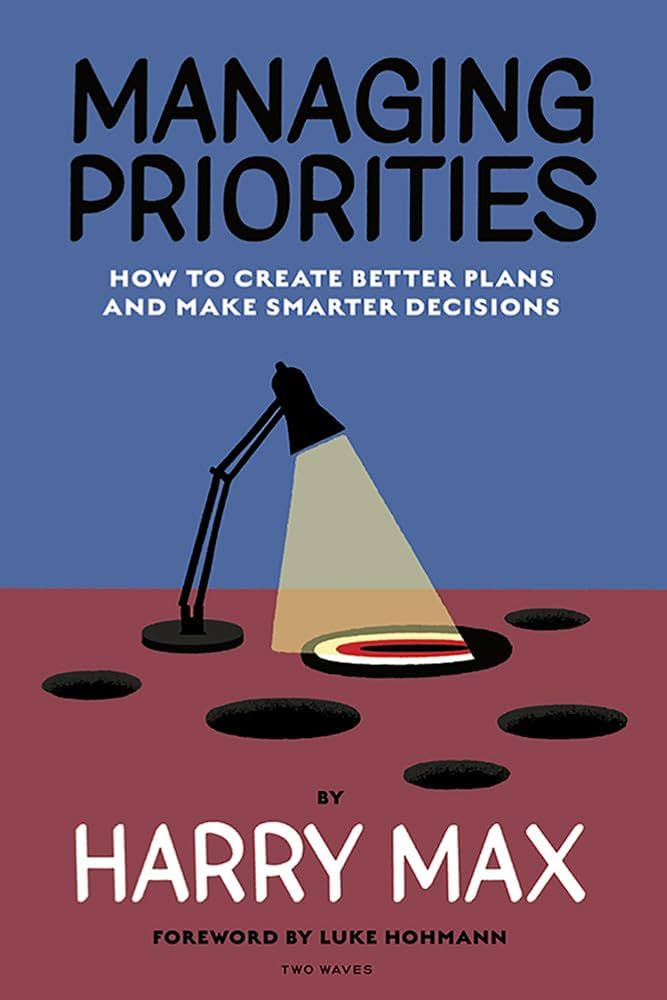
What it covers
The book works through where priority decisions come from, why they come apart, and what makes them hold.
The common failure patterns: lists nobody can defend, criteria agreed after the argument, and changes that arrive without a reason attached.
Decide, Engage, Gather, Arrange, Prioritize — what each phase settles, and what goes wrong when one is skipped.
How to run the conversation when the people who decide are not the people who carry the decision out.
Re-deciding on purpose: what to record so a change can be explained rather than re-argued.
Readers of Managing Priorities keep returning to the same point: everyone knows priorities matter, and almost nobody is told how to set them. Marc Randolph, cofounder and first CEO of Netflix, puts it plainly: “no one ever tells you how to do it. But that’s exactly what Harry Max does.” Oliver Burkeman finds “surprisingly little actionable advice” elsewhere, and calls this book “approachable, psychologically astute and deeply practical.”
People who have run engineering and product organizations describe a working toolkit. Mark Interrante, formerly of Dell and Salesforce, calls it a must-read for anyone who wants “a culture of clarity and purpose.” Wendy Shepperd of SailPoint points to its “practical frameworks” for setting priorities with intention. Luke Hohmann calls it “profoundly practical.”
Others say it goes deeper than process. Michael Anton Dila finds “a path into a powerful way of thinking about how to decide what matters.” Dave Gray calls it “a book about choosing how to choose.” Richard N. Bolles, author of What Color Is Your Parachute?, read it in an early form and wrote that “it has been a long time since one of them impressed me as much as this one has,” adding, “I found his insights quite dazzling.”
Jess McMullin’s version is the shortest: “Every time I put Harry’s methods into practice, my teams level up and so do I.”